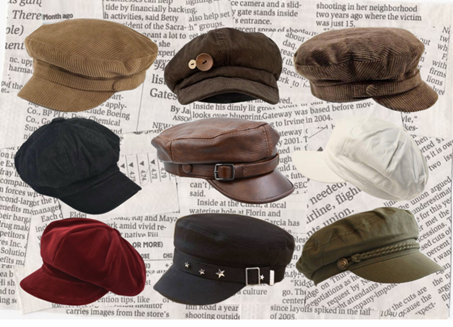
The newsboy cap began as a basic, functional piece of clothing, worn primarily by working-class men and boys. Its name is quite literal: it was commonly worn by newspaper sellers (“newsboys”), but also by factory workers, dockworkers, and laborers. Over time, however, the meaning of the cap changed depending on who wore it, reflecting the wearer’s social role and status.
Besides being a practical hat, it was commonly worn in winter and cold weather. Typically made from wool, tweed, or heavy cotton, it helped keep the head warm. It became popular among working men because it was durable, warm, and affordable.
The newsboy cap evolved from the flat cap of 14th–15th century England. While it shared a similar shape and a stiff front brim (visor) with the flat cap, the newsboy cap was fuller, rounder, and paneled from eight pieces, often with a button on top and sometimes a button attaching the front to the brim. The cap was not designed by any single person; it evolved through fashion and practicality. Its fuller crown could fit larger heads, cover hair, and trap warmth, especially useful for boys working outdoors. The small, stiff brim protected the eyes from sun and rain without obstructing work.
In the late 1800s, the newsboy cap became a strong social indicator. Among the working class, it was worn with pride as a kind of uniform, creating unity and signaling belonging. When worn by children, it marked them as peers in labor, distinguishing them from wealthier children who went to school instead of working. Wearing the cap also symbolized independence and responsibility: a boy earning money by selling newspapers or doing odd jobs was “doing his part” and contributing to his family. It communicated shared values and solidarity among peers.
At the same time, the cap carried a stigma of poverty. To the wealthy, it was a symbol of the lower class, street life, and sometimes delinquency. Authorities, merchants, and others would often make assumptions about a wearer’s social status, behavior, or prospects simply because of the hat. This created an interesting duality: the working class wore it with pride because it meant that they were earning money by wearing it, while the upper class looked down upon it because to them it meant theft.
By the early 1900s, the cap was reclaimed by upper-class men for leisure activities like golf, hunting, and driving. Its soft, practical design made it comfortable and functional, especially compared with taller or stiffer hats. Middle-class businessmen also adopted it, preferring it to the bulky top hats common at the time. Upper-class versions were made from finer fabrics such as tweed, cashmere, or high-quality wool, and sometimes had stiffer, more structured crowns and brims, giving the cap a polished, fashionable look.
This adoption blurred the social lines: the cap shifted from a working-class marker to a fashionable accessory for gentlemen outdoors. Among the upper class, it now symbolized relaxed sophistication, taste, and engagement in leisure activities, while still signaling shared values with peers.
Nowadays, the newsboy cap holds no symbolic meaning, perhaps because we have a clear image of the two polar opposite groups that once used it to signal their beliefs and affiliations. As a result, its meaning has been lost, and it has become purely a fashion statement.
Image made by me, sources of the image: