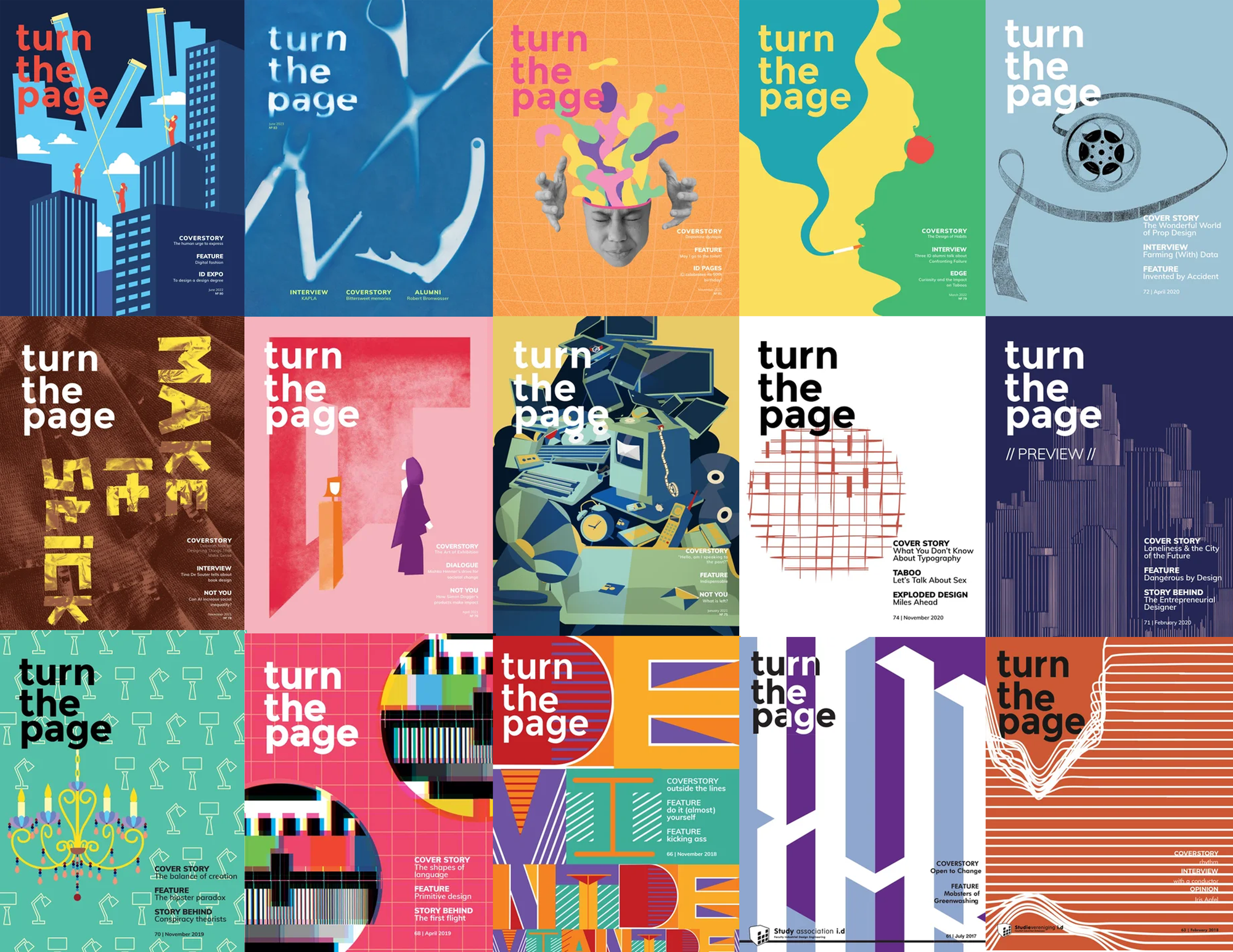
While writing my very first article for the Turn The Page online blog, I encountered the typically known writer’s block. I am no journalist. I have never written anything for a magazine. So how do I know what is expected? “Write something relevant, something interesting, something good.” As designers, we are trained to think critically. Whilst we want to create something of high quality and are in need of this critical thinking, we also don’t want the pressure to be too high, whereby nothing is good enough. This struggle made me wonder: in design, and in the way we talk about it, is it more valuable to be critical, or should we allow ourselves a bit more compassion?
Why would we need to be critical in our decisions or in the advice we give others? There are a lot of strengths in having a critical way of thinking. As a designer it is good to know that a design can always be better. To push your ideas further towards high-quality, and more meaningful and impactful designs, it is crucial to reflect and get useful feedback. However, being too critical can disrupt the flow of creativity. It may lead to a ‘never good enough’ mindset, which is mentally exhausting for designers. And the over-analysing could be a reason for indecisiveness by a fear of failure, called analysis-paralysis.
However, this problem is solvable, by adding some compassion to the evaluations. Knowing you, or the other designer, has good intentions and does the best they can do in their circumstances. Having feelings of compassion or empathy will help with psychological safety. Giving room for mistakes and humanity will create a more positive, less stressful design process. Even though this sounds like a more sustainable creative process, compassion also has its shortcomings. By avoiding hard, but important feedback, there is no room to improve our designs and to make long-term impact with it. It would be a shame to label something ‘good enough' too quickly, when it has so much potential to be of higher quality, if there was a little more of a critical reflection.
Does this mean it comes down to choosing between the quality of the design made and the mental state of the designer? That would be a sad conclusion, and fortunately, also an inaccurate one. As we all know, nothing in life is this black-or-white. It is all about balance, being critical in a compassionate manner.
How can we manage this balance inside our thoughts and in the words we spread? What does the little designer’s voice in your head say when you look at your own designs, or at the designs of others? Does it see all kinds of flaws, or do we only see the work put in it, and don’t we want to hurt feelings? It can be difficult to filter these opinions into a well-balanced reflection, but it could be the most meaningful one.
And how do we deal with imbalance coming from others? When someone is giving you harsh feedback without considering your feelings, try to look at them with a bit of compassion. Often, it is nothing personal and they probably didn’t mean you any harm or hurt. On the other hand, if you realise someone is being overly gentle, try inviting direct, honest feedback. You will probably receive it.
As a couple of design students, who just started with writing a magazine and an online blog, we kindly ask you to take it easy on us. At the same time, if there is constructive feedback that can help us grow, as designers and as writers, we welcome it wholeheartedly.