You may think that quilting refers to the making of patchwork, but quilting is actually the process of joining a minimum of three layers of fabric together. These layers consist of a top layer which often is decorative, middle layer of batting which provides warmth and the backing layer.
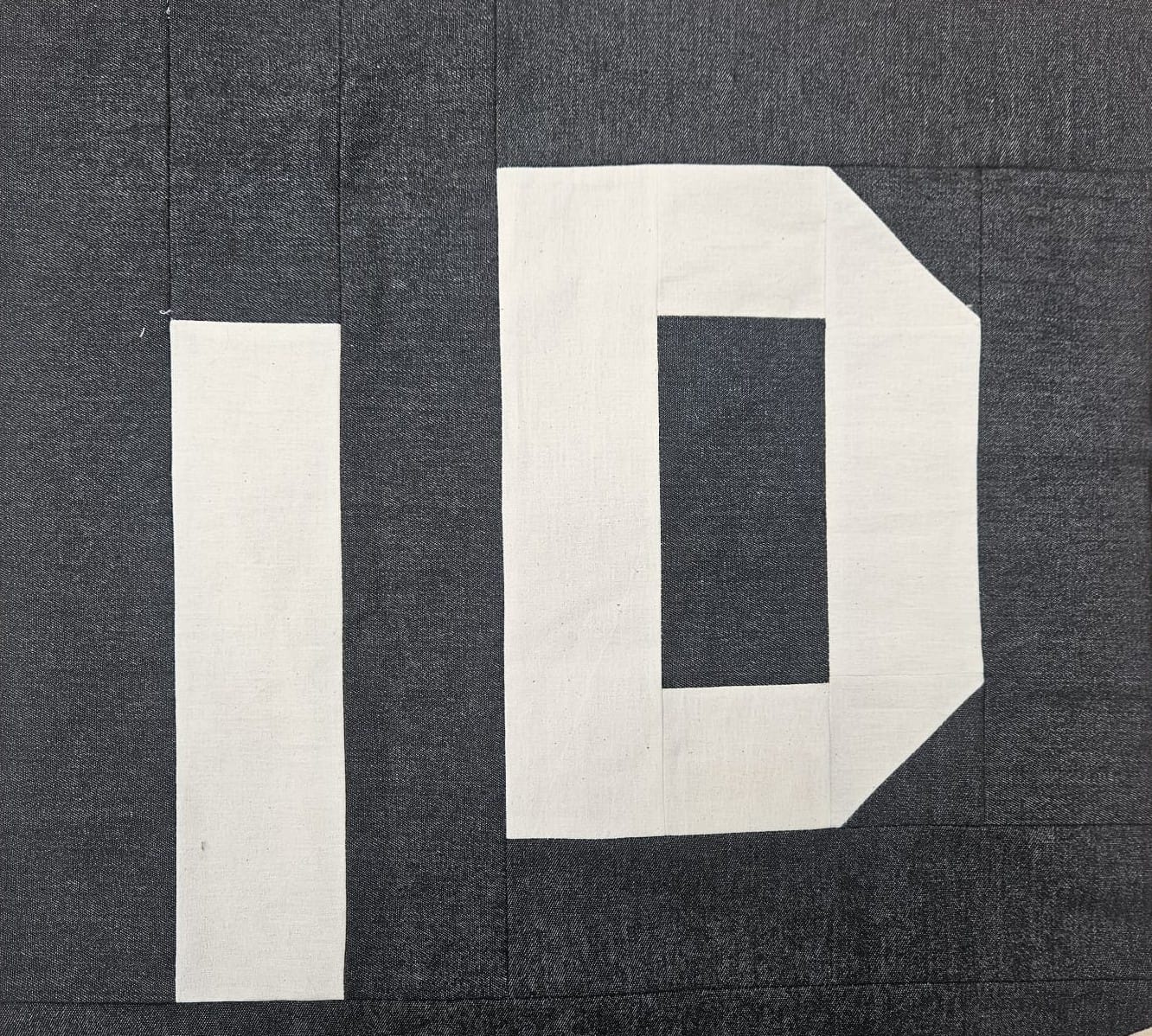
Although quilts are famous for their patchwork layer, patchwork is only one of the many techniques used in quilting. Patchwork is a technique where you sew together smaller pieces of fabric to make a larger piece. Originally patchwork was made to get full use out of fabric scraps, making sure that nothing went to waste. But in modern times fabric is often bought in larger pieces to make specific designs, allowing for a wider range of patterns to be made.
There are endless possibilities when it comes to patchwork quilting. Most patchwork is made with simple shapes like squares and triangles, which can be arranged in countless ways. These designs are made by using a block, which is like a small building block of a quilt. And then these building blocks are then repeated to make a pattern.
Once all the layers are completed they are then joined together with stiches. These stitches often have both a practical function and a decorative purpose. Together, these stitches create a pattern.
The making of a quilt is a time intensive process. Depending on the quilt the whole process easily takes from weeks to months. But that effort that is put into the piece creates the warmth that these pieces contain. In a society where speed and maximum efficiency is prioritized, the time it takes to make quilts is what makes them so special.
The patchwork patterns of quilt are not only used in traditional quilts but have also influenced modern clothing. An example is the brand Bode, who make shirts directly inspired by quilt tops. These designs copy the look of patchwork quilts by the repeating geometric designs.
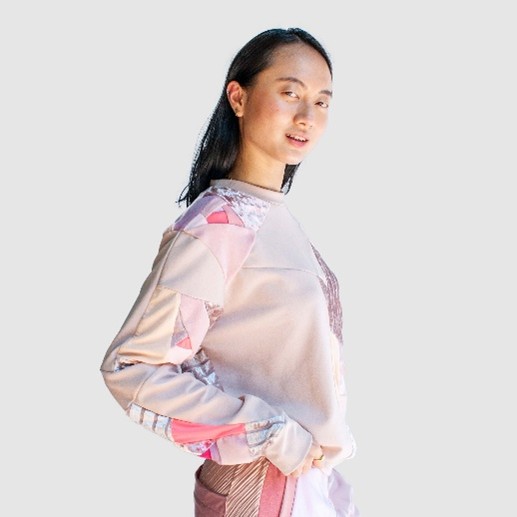
These techniques not only create beautiful designs but could also offer a solution to the waste the fashion industry creates. The fashion industry is an extremely polluting industry. And when cutting clothes out of fabric pieces of scrap fabric are created. Maybe patchwork can be the solution to this growing problem. An example of a designer who uses textile waste in his designs is Zero Waste Daniel. He is a New York based designer who uses waste from New York’s fashion industry to create new garments.
So, is patchwork the solution to the growing waste the fashion industry creates? No, probably not. Solving a problem of that scale would require deep systemic changes. But patchwork could become part of the solution. Patchwork reminds us that sustainability doesn’t have to be something new, sometimes it is thinking a different way about something we already have.
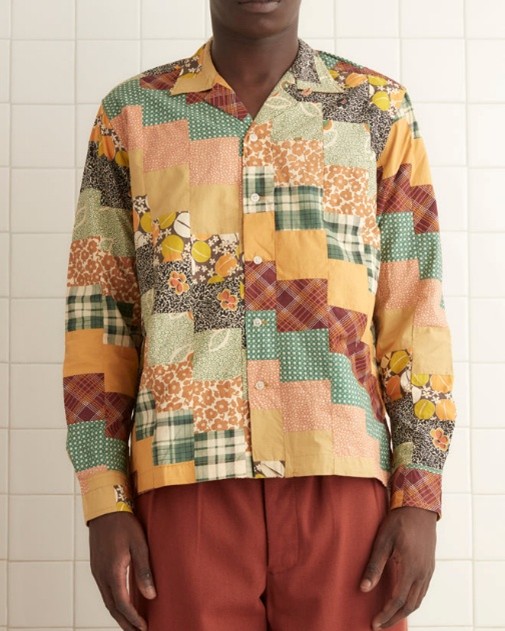
https://bode.com/products/diagonal-square-patchwork-shirt?srsltid=AfmBOoqtSoTqblVmXvPYtisFnGIi1v5N_5u-TXI1U7Tzy-TGsjqC3FHg