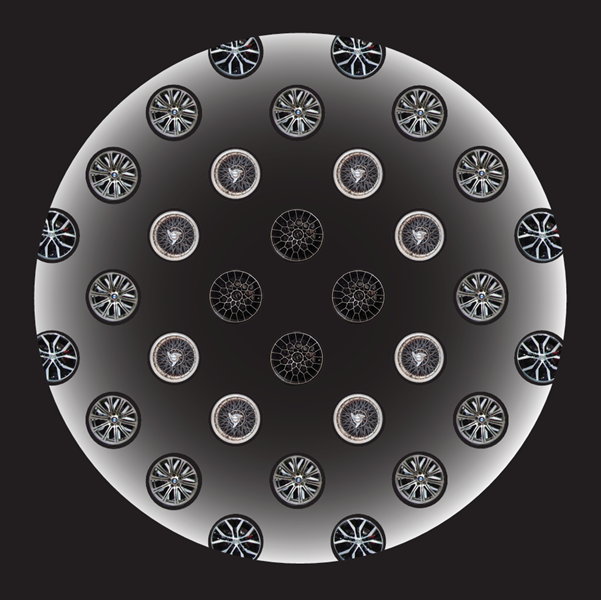
Car rims, just like cars themselves, come in many different shapes and sizes. A complex, or conversely very simple, rim design can make the wheel pop out to bystanders. That’s the reason for the common misconception that different rim designs are mostly decorative and mainly exist to improve how a car looks. That's not the case: they affect a car’s performance, how it handles, and even how well its brakes cool down. At the same time, they do strongly affect the overall style of a vehicle. They're the perfect example of how industrial design combines engineering and aesthetics.
The primary purpose of a rim is to hold the tire in place. The majority are made from steel, aluminium alloys or carbon fiber. These materials allow rims to be strong while remaining relatively lightweight. This is important because one of the most important goals in rim design is reducing weight. Wheels are part of what engineers call a car’s unsprung mass, meaning they are not supported by the suspension. The lighter these parts are, the easier it is for the suspension to respond to bumps in the road. This improves handling, acceleration, and overall ride comfort.
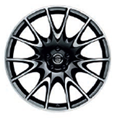
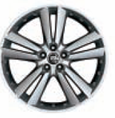
The specific parts that change a rim’s appearance are the spokes. Most wheels use radial symmetry, meaning the spokes repeat evenly around the center. This helps distribute weight evenly and keeps the wheel balanced, but it also gives designers a way to express their style. Changes in thickness, shape and spacing of the spokes create different visual effects. Thin spokes can make a wheel look lighter and sportier, while thicker spokes can give the impression of strength and durability. See the two Jaguar car rims and how big of a difference the spokes can make.
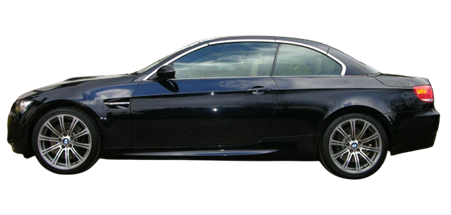
The empty spaces between spokes have another purpose aside from aesthetics. These spaces affect both the look of the wheel and how air flows through it. Larger openings often make the wheel look more aggressive and allow better airflow, while smaller and more detailed patterns can make the design appear more refined. For example, the BMW M3 uses a twin-spoke pattern where each spoke splits into two near the outer edge of the wheel. This creates a sense of movement and precision even when the car is standing still. The Lamborghini Aventador uses more angular spokes that resemble blades or arrows, which helps create the impression of speed and energy.

Performance cars are a good example of how lightweight material and rim design work in practice. The Ferrari 488 GTB has forged aluminum alloy wheels with five thin and wide-spaced spokes. These thin spokes allow for lighter wheels, while keeping the wheel strong enough for high-speed driving. The wider spaces between the spokes helps air reach the brakes and cool them during aggressive driving. In this way, the rim helps with both support and heat management.

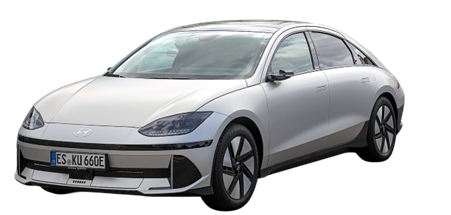
Another aspect that the rims can influence are the aerodynamics of a car. Aerodynamics have become more important with the rise of electric vehicles. Wheels can create turbulence, which increases drag. Some electric cars use more closed or aerodynamic wheel designs to avoid this. The Hyundai Ioniq 6, pictured above, uses wheels with small openings that reduce drag while still looking stylish. Even small changes in wheel design can slightly improve the driving range of an electric vehicle.
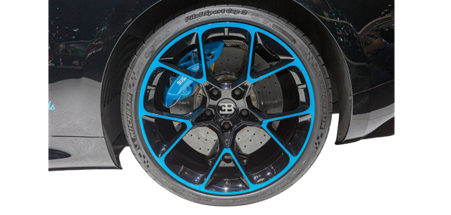
Aside from the structure and spoke geometry, designers can also play with the finish, colour and texture of a car rim. Wheels can be polished, matte or brushed, affecting the first impression of the car rim. Subtle highlights or even a fully coloured rim can complement the car’s overall design. See the example below, where the Bugatti Chiron has a bright blue rim that matches accents on the body, emphasizing the uniqueness of the car. By carefully considering the finish of the wheels, a designer can showcase their artistry and reinforce the identity of a car.
In conclusion, rims are much more than metal circles that hold tires. They are an important part of how a car performs and how it looks. Their design affects handling, cooling, weight, and aerodynamics, while also shaping the visual character of the vehicle.
Image credits:
“Aston Martin Victor 7.3 Side” by Chelsea Jay, licensed under CC BY-SA 4.0 (https://creativecommons.org/licenses/by-sa/4.0/). Cropped and color adjusted by me. My version is licensed under CC BY-SA 4.0.
“Volkswagen Golf VII GTI (side) red” by Overlaet, licensed under CC BY-SA 3.0 (https://creativecommons.org/licenses/by-sa/3.0/deed.en). Cropped and color adjusted by me. My version is licensed under CC BY-SA 3.0.
“2009 BMW M3 Cabriolet - Flickr - The Car Spy (30)” by The Car Spy, licensed under CC BY-SA 2.0 (https://creativecommons.org/licenses/by/2.0/deed.en)
“Ferrari 246 F1 left Enzo Ferrari Museum” by Morio, licensed under CC BY-SA 3.0 (https://creativecommons.org/licenses/by-sa/3.0/deed.en). Cropped and color adjusted by me. My version is licensed under CC BY-SA 3.0.
“Ferrari-Monaco-4071029" by Reinhold Möller, licensed under CC BY-SA 4.0 (https://creativecommons.org/licenses/by-sa/4.0/). Cropped and color adjusted by me. My version is licensed under CC BY-SA 4.0.
“Bugatti Chiron, IAA 2017, Frankfurt (1Y7A2857)” by Matti Blume, licensed under CC BY-SA 4.0 (https://creativecommons.org/licenses/by-sa/4.0/). Cropped and color adjusted by me. My version is licensed under CC BY-SA 4.0.
“Hyundai Ioniq 6 1X7A7258” by Alexander-93, licensed under CC BY-SA 4.0 (https://creativecommons.org/licenses/by-sa/4.0/). Cropped and color adjusted by me. My version is licensed under CC BY-SA 4.0.
“2015 Lamborghini Aventador LP700-4 Pirelli Edition 6.5 Side” by Vauxford, licensed under CC BY-SA 4.0 (https://creativecommons.org/licenses/by-sa/4.0/). Cropped and color adjusted by me. My version is licensed under CC BY-SA 4.0.