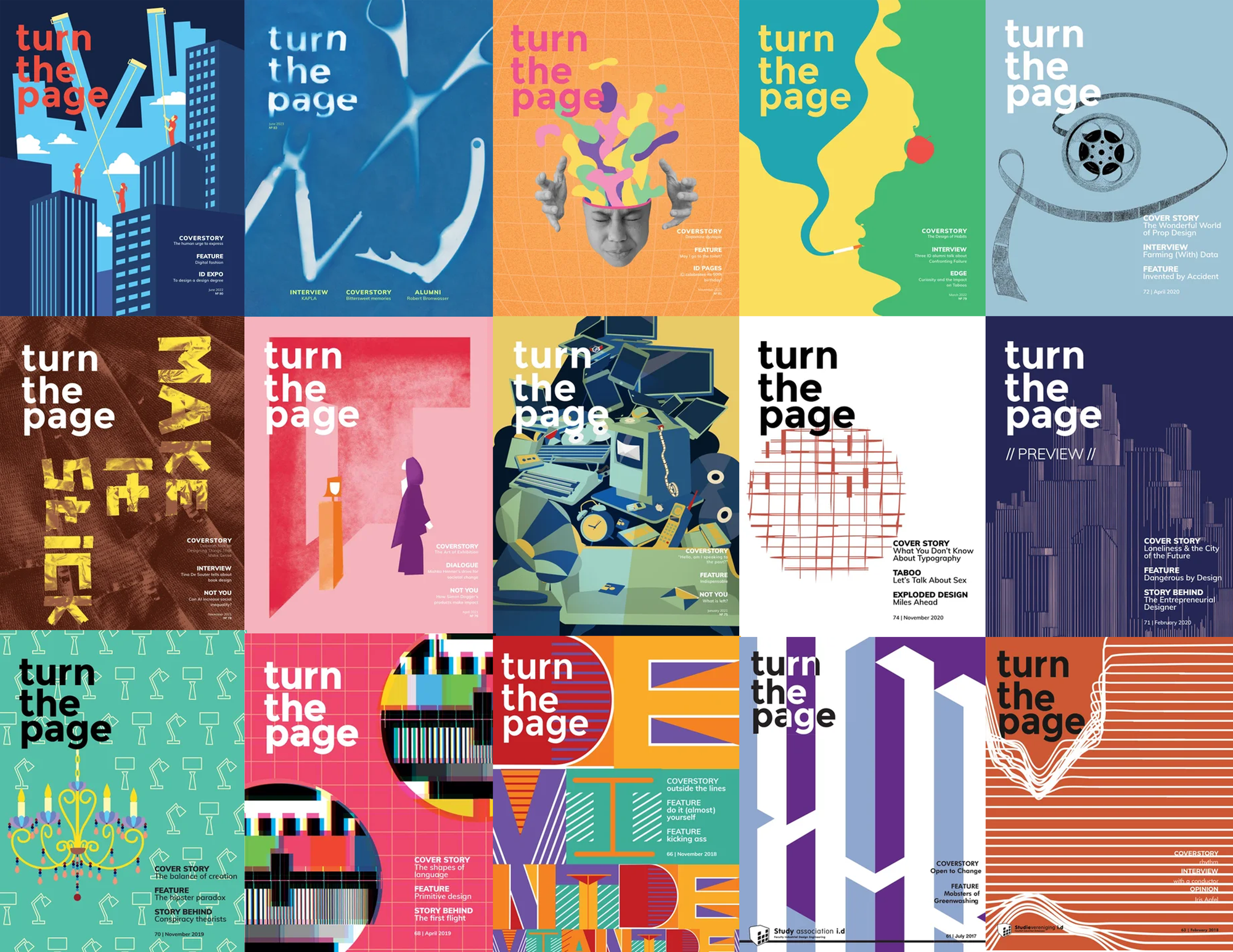
25 Years ago, the very first Turn the Page magazine was published. Created by three enthusiastic IDE students, TTP sought to spread news and articles about the actualities of design and Study Association ID. But how did these students, with zero knowledge about running a magazine, get this idea of the ground?
In 2000, the faculty of Industrial Design Engineering had their own newspaper. This newspaper was meant for staff and students of IDE and was written by the communications department of the faculty. ID Study Association (studievereniging i.d), which was 27 years old by then, had two pages in this newspaper that they could use to promote their upcoming activities and ongoing business of the association. Looking at the fact that two pages in each issue, which had to be checked by the faculty, was not nearly enough for the people of ID to express themselves, two students saw wasted opportunity. These students stepped to the board of ID with an idea: a magazine created by students of IDE where they could share developments in the world of design and the study association. This magazine was also a way for the association to receive sponsoring.
Led by Jean-Paul Niellissen, the Commissioner of Publicity of the 27th board, the team of three started making the first issue with little knowledge of graphic design and writing articles. The team decided on a plain blue cover with a white cursive text: “Turn the Page…” at the bottom. This was meant to evoke curiosity in what’s inside the magazine; thus, the name of the magazine and committee was born.
The team stepped into several issues right away, however. It was hard to get companies to sponsor the magazine as there had never been a previous issue to show. On top of that, around the time when the first TTP was being finished, the Dutch government introduced stricter privacy rules about the use of address details and mailing lists. This meant that the team could only use the address details of the members of the study association to mail the magazine, and the faculty could not facilitate address details of the rest of the IDE students and staff. To tackle this issue, the TTP team started a huge campaign to get people to sign up for the Turn the Page magazine. They started handing out flyers in the faculty and hanging up promotional material everywhere, even asking the Director of Education of the faculty for help. The team even started opening the vending machines in the faculty and put stickers on the soda cans to promote signing up for the magazine. After this campaign, the team had well over the required number of people to spread the magazine.
The idea was to make four TTP magazines a year, but seeing as the first TTP team started halfway through the academic year, two were produced. The years after that, the number of pages as well as the number of members and subscribers kept growing steadily. ID eventually gave the faculty two pages to add their own content to the magazine, and this collaboration is still going. Years after that, ID decided with the rest of the committee to continue with two releases a year, and since the start, 87 issues have been developed, with the 88th still on the way.
As of now, the structure of Turn the Page is completely being revised due to sustainability, cutting down to one big Turn the Page magazine that will be released at the end of each academic year, as well as an online platform where weekly articles, interviews and more will be released on the updated website of ID Study Association. Which appears to be the one you’re reading right now.
The creation of TTP was an iterative process. The world around us changes rapidly, and designers are constantly challenged with adapting their designs to these developments. The story about TTP shows that no matter what obstacles you find on your path, there’s always some solution, whether it means changing your project, or even changing the world around you. Thus, it’s very important to embrace these changes while never forgetting the origin of your project, even if it means stepping back to give a critical review.